
We must remember that Trump is/was far from being a typical electoral candidate. He himself is/was a member of the American Aristocracy. While he has solidified his power over the American landscape through an electoral victory, he was always a wealthy and connected member of the American plutocracy nonetheless. Had there been no election to win, were the United States of America a Neo-Roman Republic or Empire, Trump would probably have ascended to power just as easily through Machiavellian real-politick. In the hypothetical alternative universe of the United States of Aristocracy, he would have assassinated and out-manoeuvred his rivals just as he stampeded them in our democratic one. Authoritarian organisations typically favour rather than stifle the Caligula-esque figures such as Trump, but what of technocracy: the rule of the competent and wise? Is technocracy not a suitable alternative model; one that could avert the horrors of capriciously unscrupulous demagogues, without providing a power structure that would enable the reign of tyrants?
Thankfully, most people in the west are inclined to agree with Churchill and his the summation of democracy as "...the worst form of government, except all those others forms that have been tried from time to time.". The paradoxical nature of our contemporary democratic cynicism is worth unpacking. We loath democracy's nominal flaws, even though we recognise that it has value. But what would we possibly replace it with? Voters are often uninformed and irrational but un-democratic leaders are rarely renowned for their reasonableness; and while demagogues may rise to power through electoral means, are such figures truly contained in more feudal or aristocratic societies?
The problem of technocracy, especially with regards to its conception in juxtaposition to democracy, concerns two key contentious claims which simmer beneath the surface.
First we must consider that technocracy and aristocracy are more closely related than we might first think. Aristocrats have always thought themselves to be technocrats - the literal translation of aristocracy is, after all, "rule of the best". The dialogues of western academies are mostly filled with the voices of rich, white men. A strategy of deferring policy decisions to relevant captains of research and industry would result in a very limited demographic being handed control; granted that demographic would be relatively well educated and worldly, but that has generally held true for all aristocracies whose histories are filled with examples of neglectful and myopic governance. This is not to say that a nominal technocracy would not be an improvement on aristocracy, but rather to add a pessimistic footnote that calls attention to the parallels technocracy and aristocracy share in struggling to provide fair and attentive governance.
Second, we must dispute the very foundation upon which the technocratic/democratic divide rests. The pursuit of competent governance is not antithetical to the pursuit of a fair and representative governing processes. It is my belief, based upon a flexible and serious consideration of democratic praxis, that the hunt for social equity in the realm of social and political organisation is a great enhancer to our collective efficacy. In this humanist age the function of good government - whether that is taken as the management of people or a more anarchistic "organising of things" - is to aid in the running of a society conductive to the pursuit of happiness and justice. This telos is both universal and implicitly egalitarian. A full consideration of all the interests of any given fragmented society is required for any chance at realising such an aim. Democratic channels foster diversity of opinion and provide the possibility of levelling differences in power. This is an often overlooked yet deeply important element of the democratic process and one which aids us in our technocratic desire for competent and informed decision making. Political questions are often value-laden and only amicably resolved after much representative dialogue and exchange of perspective. The cold expert-veto-technocracy outlined above may be effecient when handling questions of truth but it is limited in so far as questions of policy are frequently linked with more collaborative inter-social projects of discerning what is just and fair.
Yet despite this, to understand the call for greater involvement of expert opinion as an un-democratic or "extra-democratic" call is to be fooled into maintaining a limited view of what democracy could be. One that, as we will see, is pernicious in a philosophical sense and perhaps even spiritually harmful to the democratic project.
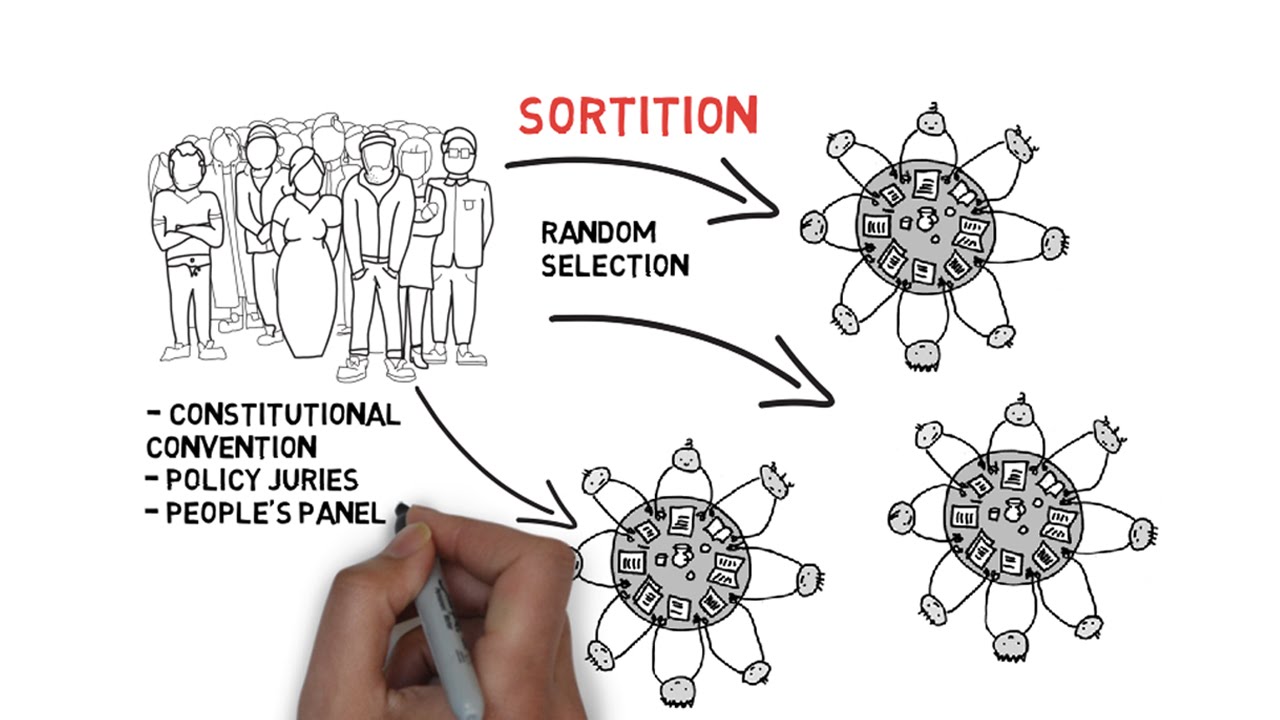
There are plenty of ways to integrate expert knowledge into democratic culture. Consider the "mini-publics" of the deliberative democrats: small groups in which citizens, chosen for their representativeness of the larger concerned population, gather together to make large-scale policy decisions after being briefed by experts and given space for collective reflection on the topic. Although major legislative bodies have been hesitant to trust these mini-publics, the qualitative research on the topic is very promising. Furthermore, models of Sortitive Democracy provide other promising avenues for incorporating professional and worldly expertise into the democratic process by making eligibility for particular roles subject to qualifications and experience in the relevant area of policy. Even the bog-standard electoral system can be tweaked to produce better informed voters by improving services which pertain to public education.
One might ask why I have bothered writing this post. After all, we all know that democracy really is the best of the worst, and none of us have any real desire to replace it. However I fear that our cynicism is both unwarranted and even dangerous. Democracy is not just a necessary arrangement to aid in the abatement of war-crimes and authoritarian collapse; it is a vessel which holds the seeds for a fairer and more intelligent world. Its invocation may not necessarily be a magical elixir to cure all ills, and it may require far more than a mere "going through the motions" to achieve anything worthwhile, but it is one of the moral zeniths of our modern age - however small, broken and disappointing it may seem to us now.
The ideals of democracy are far more institutionally flexible than they are often credited for. Democracy's core principles are firm, yet its praxis can easily be reworked to avoid the pitfalls of the dangerously populist and electorally obsessive systems of today. There are options for democrats who find the current formulations un-satisfactory; and there are steps that can be taken to improve and change it for the better. To portray democracy as a project doomed to produce Trump-like characters by way of unfortunate necessity is to limit our democratic sensibility and imagination: it is to tie our hands in the face of adversity rather than use this moment for reflection on the democratic failures of the current model and its attendant institutions.
In so far as Trump is a representative of an ignorant mass-hysteria coalesced around a cynical demagogue, he is also a representative of the deeply underdeveloped elements of American democracy. His triumph through the rallying of an un-communicative and ignorant public is but a indictment of the poor soil that has made up the substrate of U.S' voting public. In short, Trump is a poor leader in so far as he is the product of a poor democracy. The results of the 2016 election should not be a cause for empty despair at the supposed inefficacies of the democratic dream but rather a cause for reflection on the deeply under-developed potential of our democratic ideals and an affirmation of the steps that we must take to realise their humanistic, and even promethean, values.
Democracy is important: do not let the cynics discourage you.
