Showing posts with label Democracy. Show all posts

Sunday, 1 April 2018

Thoughts on Fake News: One Step Forward One Step Back


Wikipedia should be considered as an eighth wonder of the world. A totally open source encyclopaedia covering almost every topic imaginable that, despite the prejudices of some, is remarkably accurate. It is proof that democracy works; that allowing everyone to participate, even in something with as little margin for error as the construction of an encyclopaedia, can be as effective as entrusting this task to an exclusive team of experts. You can now receive a reasonably authoritative information dump on almost any subject you can think of, with an accompanying bibliography, within seconds. What's more through the use of 'talk pages', you can read through archived debates between editors so that you have context for why one article was written or edited one way or another. News can similarly also be acquired now through the internet and social media, spread through shared articles and first-hand reports rather than received from a handful of broadcasting corporations who decide in private which stories are worth spreading.


Stories of ‘Fake News’ perpetuated by trolls that tell more badly thought out lies with every passing minute and insular social groups curated by benign but ghettoising algorithms are the other side of this new digital levelling. Furthermore, this open source world is already being exploited by disinformation campaigns run by organised intelligence agencies. Wikipedia has so far proved fairly resilient to low level trolling and casual human error but attacks launched by state-sponsored groups have only just started to ramp up. Open source technology has so far sustained itself on the good will of the internet. There have been malicious attempts to subvert the format in the past but they have generally been easy to spot and correct. Now we are faced with well-funded groups working hard to find exploits that could give their masters control of this new digital space.


Some people are alarmed by this modern predicament of having more information and confusion at the same time. But fake news is not a new phenomenon; propaganda and misinformation have always been a part of media. When searching for information we now have a lot more junk to sift through but we also have more options when cross-referencing or gathering alternative views. The distribution of news through social media may be more open to abuse but has also allowed for a more independent culture of media consumption, and I can’t help but wonder if those decrying the rise of digital fake news, primarily those still invested in ‘old media’, aren’t just mourning the loss of their cultural capital. The public are undeniably growing less dependent on newspaper editors and it must be uncomfortable for them to watch their status as the cultural arbiters of truth slowly slip away.


There is reason to be worried about the future of online democracy; malicious disinformation, the rise of hyperbolic click-bait and the formation of online political ghettos are problems that could cause a lot of trouble in the future. In saying that I'm not sure a return to traditional media structures is really much of an improvement. 

Tuesday, 15 November 2016

On Democracy and Its Cynics: Reflections on Trump

The presidential election of the United States of America 2016 transpired just under a week ago and now every person of every sensible shade of political opinion is shaking their head in disbelief. Naturally, the electoral victory of such a ruinous candidate as Trump has resulted in some bitter reflection on the values and limitations of democracy (examples of this anxiety/bitterness in pre-election form are found: here and here). The criticisms now are largely the same as those raised in times of yore: most voters are ignorant and, in an electoral democracy, charismatic leaders will often outperform more competent candidates. These points are echoed throughout the history of political philosophy from Plato's Republic to the "elite theorists" of democracy of the 50's, and they are given plenty of air time in times of distress. It is then only natural that we see them aired once more.

                                     Image result for Trump business

We must remember that Trump is/was far from being a typical electoral candidate. He himself is/was a member of the American Aristocracy. While he has solidified his power over the American landscape through an electoral victory, he was always a wealthy and connected member of the American plutocracy nonetheless. Had there been no election to win, were the United States of America a Neo-Roman Republic or Empire, Trump would probably have ascended to power just as easily through Machiavellian real-politick. In the hypothetical alternative universe of the United States of Aristocracy, he would have assassinated and out-manoeuvred his rivals just as he stampeded them in our democratic one. Authoritarian organisations typically favour rather than stifle the Caligula-esque figures such as Trump, but what of technocracy: the rule of the competent and wise? Is technocracy not a suitable alternative model; one that could avert the horrors of capriciously unscrupulous demagogues, without providing a power structure that would enable the reign of tyrants?


Thankfully, most people in the west are inclined to agree with Churchill and his the summation of democracy as "...the worst form of government, except all those others forms that have been tried from time to time.". The paradoxical nature of our contemporary democratic cynicism is worth unpacking. We loath democracy's nominal flaws, even though we recognise that it has value. But what would we possibly replace it with? Voters are often uninformed and irrational but un-democratic leaders are rarely renowned for their reasonableness; and while demagogues may rise to power through electoral means, are such figures truly contained in more feudal or aristocratic societies?


The problem of technocracy, especially with regards to its conception in juxtaposition to democracy, concerns two key contentious claims which simmer beneath the surface.


First we must consider that technocracy and aristocracy are more closely related than we might first think. Aristocrats have always thought themselves to be technocrats - the literal translation of aristocracy is, after all, "rule of the best". The dialogues of western academies are mostly filled with the voices of rich, white men. A strategy of deferring policy decisions to relevant captains of research and industry would result in a very limited demographic being handed control; granted that demographic would be relatively well educated and worldly, but that has generally held true for all aristocracies whose histories are filled with examples of neglectful and myopic governance. This is not to say that a nominal technocracy would not be an improvement on aristocracy, but rather to add a pessimistic footnote that calls attention to the parallels technocracy and aristocracy share in struggling to provide fair and attentive governance.


Second, we must dispute the very foundation upon which the technocratic/democratic divide rests. The pursuit of competent governance is not antithetical to the pursuit of a fair and representative governing processes. It is my belief, based upon a flexible and serious consideration of democratic praxis, that the hunt for social equity in the realm of social and political organisation is a great enhancer to our collective efficacy. In this humanist age the function of good government - whether that is taken as the management of people or a more anarchistic "organising of things" - is to aid in the running of a society conductive to the pursuit of happiness and justice. This telos is both universal and implicitly egalitarian. A full consideration of all the interests of any given fragmented society is required for any chance at realising such an aim. Democratic channels foster diversity of opinion and provide the possibility of levelling differences in power. This is an often overlooked yet deeply important element of the democratic process and one which aids us in our technocratic desire for competent and informed decision making. Political questions are often value-laden and only amicably resolved after much representative dialogue and exchange of perspective. The cold expert-veto-technocracy outlined above may be effecient when handling questions of truth but it is limited in so far as questions of policy are frequently linked with more collaborative inter-social projects of discerning what is just and fair.


Yet despite this, to understand the call for greater involvement of expert opinion as an un-democratic or "extra-democratic" call is to be fooled into maintaining a limited view of what democracy could be. One that, as we will see, is pernicious in a philosophical sense and perhaps even spiritually harmful to the democratic project.


There are plenty of ways to integrate expert knowledge into democratic culture. Consider the "mini-publics" of the deliberative democrats: small groups in which citizens, chosen for their representativeness of the larger concerned population, gather together to make large-scale policy decisions after being briefed by experts and given space for collective reflection on the topic. Although major legislative bodies have been hesitant to trust these mini-publics, the qualitative research on the topic is very promising. Furthermore, models of Sortitive Democracy provide other promising avenues for incorporating professional and worldly expertise into the democratic process by making eligibility for particular roles subject to qualifications and experience in the relevant area of policy. Even the bog-standard electoral system can be tweaked to produce better informed voters by improving services which pertain to public education.
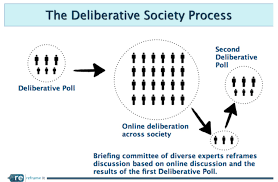
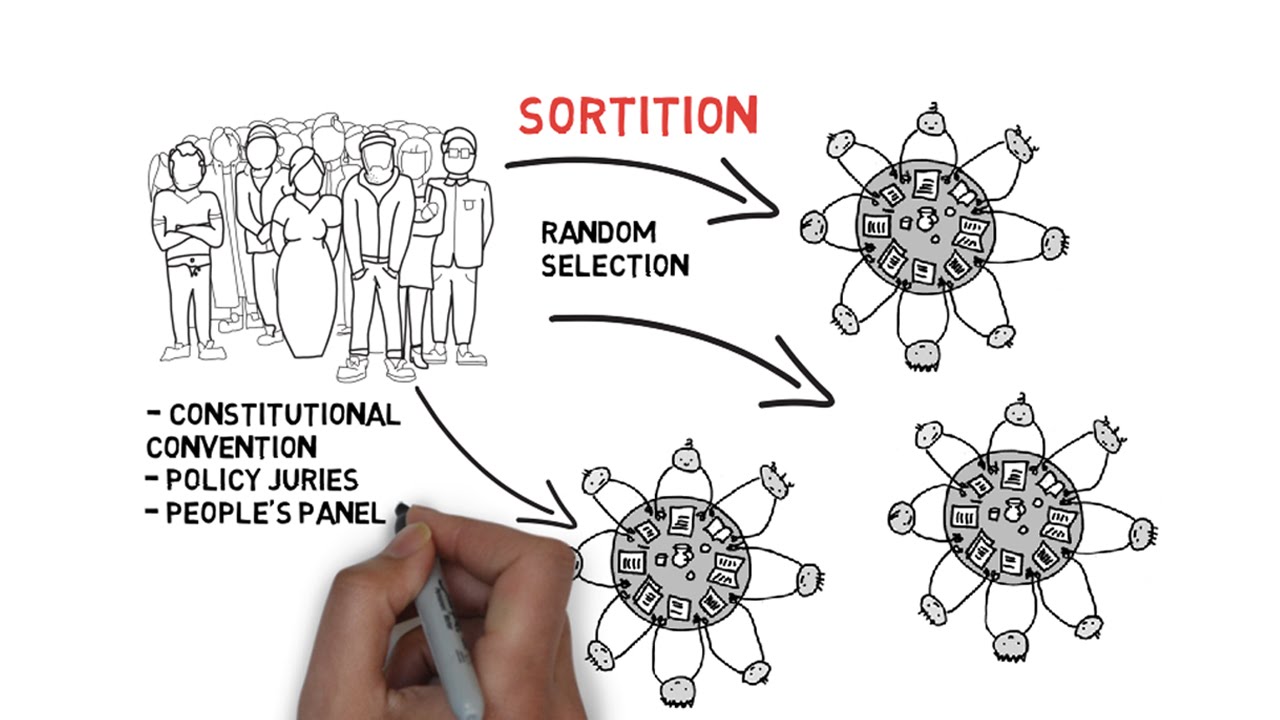
Image result for deliberative democracy Image result for sortition democracy


One might ask why I have bothered writing this post. After all, we all know that democracy really is the best of the worst, and none of us have any real desire to replace it. However I fear that our cynicism is both unwarranted and even dangerous. Democracy is not just a necessary arrangement to aid in the abatement of war-crimes and authoritarian collapse; it is a vessel which holds the seeds for a fairer and more intelligent world. Its invocation may not necessarily be a magical elixir to cure all ills, and it may require far more than a mere "going through the motions" to achieve anything worthwhile, but it is one of the moral zeniths of our modern age - however small, broken and disappointing it may seem to us now.


The ideals of democracy are far more institutionally flexible than they are often credited for. Democracy's core principles are firm, yet its praxis can easily be reworked to avoid the pitfalls of the dangerously populist and electorally obsessive systems of today. There are options for democrats who find the current formulations un-satisfactory; and there are steps that can be taken to improve and change it for the better. To portray democracy as a project doomed to produce Trump-like characters by way of unfortunate necessity is to limit our democratic sensibility and imagination: it is to tie our hands in the face of adversity rather than use this moment for reflection on the democratic failures of the current model and its attendant institutions.


In so far as Trump is a representative of an ignorant mass-hysteria coalesced around a cynical demagogue, he is also a representative of the deeply underdeveloped elements of American democracy. His triumph through the rallying of an un-communicative and ignorant public is but a indictment of the poor soil that has made up the substrate of U.S' voting public. In short, Trump is a poor leader in so far as he is the product of a poor democracy. The results of the 2016 election should not be a cause for empty despair at the supposed inefficacies of the democratic dream but rather a cause for reflection on the deeply under-developed potential of our democratic ideals and an affirmation of the steps that we must take to realise their humanistic, and even promethean, values.


Democracy is important: do not let the cynics discourage you.

Saturday, 1 October 2016

Book Review: Against Elections by David Van Reybrouck


"It would appear that the fundamental cause of Democratic Fatigue Syndrome lies in the fact that we have all become electoral fundamentalists, despising those elected but venerating elections. Electoral fundamentalism is an unshakeable belief in the idea that democracy is inconcievable without elections and elections are a necessarily and fundamental precondition when speaking of democracy. Electoral fundamentalists refuse to elections as a means of taking part in democracy, seeing them instead as an end in themselves, as a holy doctrine with an intrinsic inalienable value."

- Against Elections: The Case for Democracy, p.39.


The statistics on electoral participation in the first world make for a puzzling read. At a time where more people than ever live and vote in democracies, satisfaction is steadily dropping. What has gone wrong, and what is to be done? David Van Reybrouch, a radical democrat, thinks the problem lies in our reliance on elections and that the most feasible and effective fix is to be found in sortitive democracy. 

Sortitive democracy, for the uninitiated, is where positions of power and responsibility are assigned via random chance or "lottery". This lottery can take place among self-selected candidates or work by pooling from among a curated register. It can field qualifications such as "no children" or "must have experience or education relevant to the post" but it generally ensures an equal chance at power for all participants.

What are the advantages of such a system? Well, without elections, parliamentary members can focus on making decisions to the best of their ability. Curating an electable persona while in power is futile if your re-election chances are based, literally, on chance rather than public image and effective canvasing. The sortitive process also reduces the likelihood of demagogues acquiring power and the possibility of media savvy politicians outwitting more competent but less charismatic rivals. The disadvantages are surprisingly limited. While sortitive democracy limits the ability to veto characters who would otherwise never be elected, Reybrouck provides plenty of examples of how checks and balances can be implemented to limit the influence of unrepresentative winners- multiple chambers etc with veto powers and other tempering measures at their disposal.

The most obvious comparison for Reybroucks Against Elections is with David Graeber's The Democracy Project. Both aim(ed) to expand their readers understanding of what democracy could be and suggested alternate forms - although Reybrouck's book is the more detailed and moderate of the two. Reybrouck is clearly a parliamentarian. one who is best summarised as a liberal with some unorthodox ideas; although a radical democrat he is quite at odds with Graeber.

Notably, Reybrouck's treatment of other forms of radical democracy, namely anti-parliamentarianism, is curt and disappointingly vague.  For him the overly heterogenous processes of Occupy were its downfall and resulted in a movement unable to articulate a cohesive set of demands. This is in contrast to Graeber who takes Occupy's decentralised and democratic process to be the very thing that weathered the movement so long against the NYPD. But Reybrouck's critique feels unfinished, almost unattempted. The decentralised participation and consensus systems of Occupy are brushed off before they are even properly articulated and it would help his argument greatly if he provided a more comprehensive breakdown of why he suspects such systems are destined to fail.

Part of Reybrouck's critique of Occupy, and indeed his defence of parlimentarianism, is bundled up in the broadly asserted truism that anything of a revolutionary or anti-parlimentarian nature will necessitate brutality: the hard-core participatory democrats of Occupy are misguided and destined to become proto-stalinists in love with themselves and revolutionary terror. The difference between rejecting parlimentarianism in favour of revolutionary despotism and rejecting parlimentarianism because you are trying to articulate a kinder, less corruptible form of democracy is never acknowledged.

What is proposed towards the end of the book is a sortitive democracy that could temper the electoral system in the hope of one day replacing it. His rhetoric towards the end is hopeful. Although he thinks the current democratic systems are failing Reybrouck is confindent that Sortitive Democracy is a solid solution that has been proven work before, all it needs is a public and political class to believe in it enough to really commit.

Perhaps what is left unaccounted for is that a democracy with low participation and public trust, while dysfunctional, is not necessarily unstable. Academics often over-estimate the importance and timeliness of their solutions to macro-political problems of post-modernity. This is particularly true of radical democrats and other popular authors of the libertarian left.  But while Sortitive Democracy is one way of ameliorating the failures of electoral liberalism, that does not mean that the failures of electoral liberalism are bad enough to propel change. In a society where wealth plays a large role in determining political outcomes we must, cynically, ask whether its failures are serious enough to threaten the affluence of its most powerful members and force the status quo to reconsider itself.

Against Elections is an accessible book that contributes to the broadening of popular debate around the question of democracy, for that it should be thanked. It provides a fairly well-paced and considered critique of elections that help us ask whether our democratic ideals could mean something more than gritting out teeth whenever a demagogue finds themselves on the precipice of electoral ascension. Whether Sortitive Democracy itself is a salve for the paradoxical democratic deficit in the land/s of the free remains to be seen.

Friday, 24 July 2015

"Rethinking Democracy" By Carol Gould: First Thoughts On Reading


 It is a tragedy that this kind of political philosophy is so overlooked. Carol Gould is one of the few authors out there who takes democracy seriously enough to construct a theory from it, and yet her work is often missed when reviewing the literature. Despite the fidelity of Gould's work to the democratic project she barely makes it into the democracy entry on the Stanford Encyclopaedia of Philosophy except as a foot-note. In fact the theories of democracy that are touched on in the SEP are largely restricted to liberal, neo-liberal and aristo-monarchic positions.

So why has the work of Gould and her peers been so ignored?

Personally I think the problem lies with its ambigious classification and heritage. The arguments that Gould offers are too radical to fit in with the liberalism of Rawls and Dahl yet too reformist to be discussed alongside Anarchism. Furthermore, theories of participatory democratic theory are so multifaceted in terms of their origins that it is very difficult to slot them into one singular account of modern democratic theory, ergo they are often left out. 


Pragmatically speaking, this kind of book would be very informative for those interested in anarchism: in so far as it delineates an actual modus operandi for future "liberated territories". While Gould does retain both the state and the market as methods of organisation they are so augmented by the time she re-formulates them that they can barely be considered to be the kind of things that anarchists rail against. Her view of a democratic economy, for instance, largely mirrors anarcho-syndicalism (though it is never described in such terms) and her approach to governance consists of bottom up participatory structures. In short, the market that Gould wants is a socialist one and the territorial governance that she envisions needs little tweaking to defy conventional anarchist critiques.

It's not all one way traffic though. Gould's model of democracy could learn a few things from anarchism vis-a-vis institutional practises. Her vision of democratic participation, the actual making of decisions, seems to be focused on conversations followed by, what one would assume to be, a majority vote. Her theory's defence against majoritarian tyranny and persistent minorities is simply an appeal to the democratic character of its subjects. The anarchist tradition could offer here both a model of consensus decision making and an emphasis on decentralisation in order to build a more robust systemic response to the various upsets that can result from majority rule.

The social ontology and the ethical underpinnings of her theory remind me of Susan Neiman's "Why Grow Up?": at its core there's a really invigorating vision of humans as creative beings seeking self-betterment. In line with this, the book's content rests on a moral conception of self-determination as a requirement for human self-development. Gould rejects both liberal individualism and socialistic holism for an intermediate ontology that views humans as individuals whose identities are understood, pursued and realised through social relationships.


In terms of economic justice, this social ontology provides her with a twin pronged attack. If the purpose of freedom is self-development then this defends both "welfarism" and worker control of the means of production. "Welfarism" is justified on the grounds that everyone is entitled, where possible, to the resources that make self-development possible and the "rights to worker control" become justified where work is a social activity in which self-development takes place.

The book is strikingly comprehensive. "Rethinking Democracy" deals with topics as varied and concrete as the relationship between freedom and equality; the role of technical expertise in participatory democracy,  and the consequences Gould's theory has for debates surrounding global interventionism. If you want an idea of how anarchist principles might play out in a future society, but can't stand the more tendentious elements of anarchist rhetoric, then this is a worthwhile read.